How to Plan a Long-Term Family Trip
The Reality of Trading the White Picket Fence for the Open Road
The dream starts with a simple "what if." What if we didn't wait for retirement to see the world? What if our children learned about the Colosseum while standing in its shadow rather than reading about it in a dusty textbook? Transitioning from a standard vacation mindset to a full-time nomadic lifestyle is a monumental shift. When you are learning how to plan a long-term family trip, you aren't just booking a flight; you are redesigning your entire life's infrastructure.
As a digital nomad family, we’ve navigated the highs of sunsets in Bali and the lows of midnight fever in a remote mountain village. It’s a beautiful, chaotic, and deeply rewarding path. However, the difference between a successful multi-month journey and a stressful burnout often comes down to the depth of your preparation. This isn't just a travelling with family essay; it’s a tactical blueprint for those ready to make the leap.
This article is part of our comprehensive family travel series. Be sure to check out our Ultimate Guide to Family Travel in 2026 for a complete overview.

Financial Architecture: Budgeting for the Long Haul
The most common question we get as a travel family influencer is: "How do you afford it?" The secret isn't a massive inheritance; it's meticulous financial planning and understanding the concept of geo-arbitrage. When traveling with family for months at a time, your daily spending habits must change. You are no longer on "vacation mode" where money flows like water.
1. Establish Your "Burn Rate"
Calculate your monthly expenses at home and compare them to your target destinations. Many families find that living in Southeast Asia or parts of Central America is actually cheaper than paying a mortgage and utilities in a major Western city.
2. The Emergency Buffer
Always have a "get home fast" fund. This is a non-negotiable stash of cash that covers last-minute flights for the whole family and at least two months of living expenses.
3. Passive vs. Active Income
Are you working remotely, or are you living off savings? If you are balancing work and travel, ensure your destination has the infrastructure to support your job. High-speed internet is no longer a luxury; it’s a survival tool for the modern nomad.
Choosing Your First "Base" Destinations
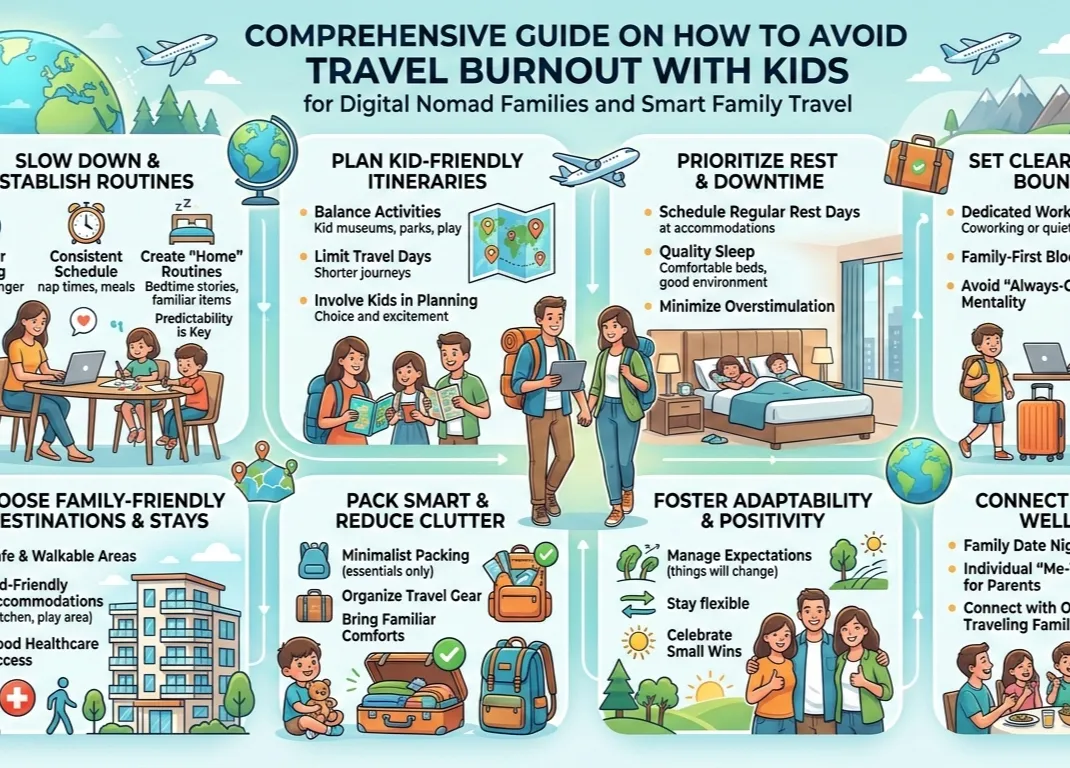
When you are first figuring out how to plan a long-term family trip, the temptation is to see everything at once. This is the fastest way to "travel burnout." Instead, embrace the philosophy of slow travel. Spend at least one month in each location.

Look for "family-friendly hubs." These are cities with established expat communities, reliable healthcare, and plenty of parks. Places like Chiang Mai, Lisbon, or Playa del Carmen offer a soft landing for families new to the lifestyle. When travelling with family, the ease of the first destination sets the tone for the entire trip. If the first month is a logistical nightmare, the kids (and you) will want to head home before the second month begins.
Logistics: The "Un-Fun" But Essential Foundations
You cannot simply pack a bag and leave. Long-term travel requires a backbone of legal and medical safety nets. This is where most families feel overwhelmed, but breaking it down into a checklist makes it manageable.
Documentation and Visas
Depending on your nationality, visa-hopping can be a full-time job. Some countries offer "Digital Nomad Visas" that allow stays of 6 to 12 months, which are perfect for families.
To further help you on your journey, we highly recommend reading:
Health and Insurance
Standard travel insurance is usually not enough for a year-long trip. You need international health insurance that covers routine check-ups, dental, and emergency evacuations. Don't forget to carry a physical copy of your children's immunization records.
Balancing Education: Worldschooling and Routine
One of the biggest hurdles in how to plan a long-term family trip is the "schooling" question. How do you keep your children from falling behind? The answer is often a mix of formal curriculum and "worldschooling."
If you're looking to expand your knowledge beyond planning, you might also find this useful:
Education on the road isn't about sitting at a desk for six hours. It’s about visiting the Louvre to talk about history, or using local currency to teach math at a market. However, children thrive on routine. Even if the scenery changes, the "start" of the day should feel familiar. Whether it's a specific breakfast ritual or a set reading time, these anchors prevent the "lost" feeling that can come with constant movement.

Packing for Four Seasons in Two Suitcases
The golden rule of traveling with family long-term is: If you don't use it once a week, you don't need it. Overpacking is a physical and mental burden.
- The 5-Day Rule: Pack enough clothes for five days. You will be doing laundry regardless of how much you bring.
- Tech Essentials: Universal adapters, power banks, and noise-canceling headphones (a lifesaver for parents working in small apartments).
- First Aid Kit: Carry a robust medical kit with familiar brands for fever, allergies, and minor wounds. Finding a specific brand of children's ibuprofen at 3 AM in a foreign country is a challenge you don't want.
Value Section: The 72-Hour Arrival Protocol
In our years as a travel family influencer, we’ve developed a "Value Section" strategy we call the 72-Hour Arrival Protocol. This is designed to eliminate the stress of landing in a new country.
- Day 1: The Soft Landing. No sightseeing. The only goals are to find the nearest grocery store, get a local SIM card, and locate the nearest pharmacy.
- Day 2: The Neighborhood Walk. Walk a 1-mile radius around your accommodation. Find the "green spaces" (playgrounds) and the "caffeine stations" (cafes with Wi-Fi).
- Day 3: The Slow Start. Begin your normal work/school routine. Do not treat the new city like a tourist destination yet. Establishing the "home base" feeling early is the key to longevity.
Maintaining Mental Health and Marriage
The elephant in the room when discussing how to plan a long-term family trip is the strain it puts on relationships. You are with your partner and children 24/7. Space is a luxury.
- Schedule "Me Time": Each parent needs at least three hours a week of total solitude. No kids, no work, no "planning."
- Date Nights: Even if it’s just drinking local wine on a balcony while the kids sleep in the next room, maintain your identity as a couple.
- Acknowledge the Bad Days: You will have days where everyone cries, the Wi-Fi fails, and you miss your couch at home. This isn't a sign that you failed; it's a sign that you're human.
FAQ
How much does a long-term family trip cost? The cost varies wildly based on your lifestyle, but many nomad families spend between $3,000 and $6,000 per month. Slow travel in regions like Southeast Asia or Eastern Europe can significantly lower this cost compared to Western Europe or North America.
What about my house and belongings at home? Most families either sell everything to fund the trip or rent out their home to create a passive income stream. Using a long-term storage unit for sentimental items is a common middle-ground solution.
Is long-term travel safe for young children? Yes, with proper preparation. Prioritize countries with good healthcare systems, stay up to date on vaccinations, and always have comprehensive travel insurance. Children are often more adaptable than adults!
How do we handle friendships and socialization for the kids? Socialization requires more effort on the road. Look for "Worldschooling Hubs," join local Facebook groups for expat families, and use platforms like Boundless Life or Outschool to connect with other traveling families.
Can I really work full-time while traveling with kids? It is possible but requires a strict schedule. Many families use a "tag-team" approach where one parent works in the morning while the other explores with the kids, then they swap in the afternoon.
AdSense Placeholder (728x90 or 300x250)
Join Our Nomad Family
Get weekly tips on smart family travel, remote work strategies, and homeschooling resources delivered straight to your inbox.
We respect your privacy. Unsubscribe at any time.
Related Articles