Family Travel Documents You Need
Pendahuluan
There is a specific kind of cold sweat that breaks out when you're standing at an immigration counter, three tired kids in tow, and the officer asks for a document you didn't know existed. As a digital nomad family that has crossed dozens of borders, we’ve learned the hard way that "winging it" doesn't work when it comes to paperwork. Having the right family travel documents you need isn't just about legality; it’s about preserving your sanity and ensuring your global adventures don't end before they even begin.
Whether you are planning a short vacation or a long-term nomadic lifestyle, documentation is the backbone of your logistics. This article is part of our comprehensive family travel series. Be sure to check out our Ultimate Guide to Family Travel in 2026 for a complete overview of how to navigate the world with your tribe.
In the following sections, we will break down the essential paperwork, from the obvious passports to the obscure notarized consent letters, and how to manage your travel health records to ensure you’re never caught off guard.
The Foundation: Passports and Visas for the Whole Tribe
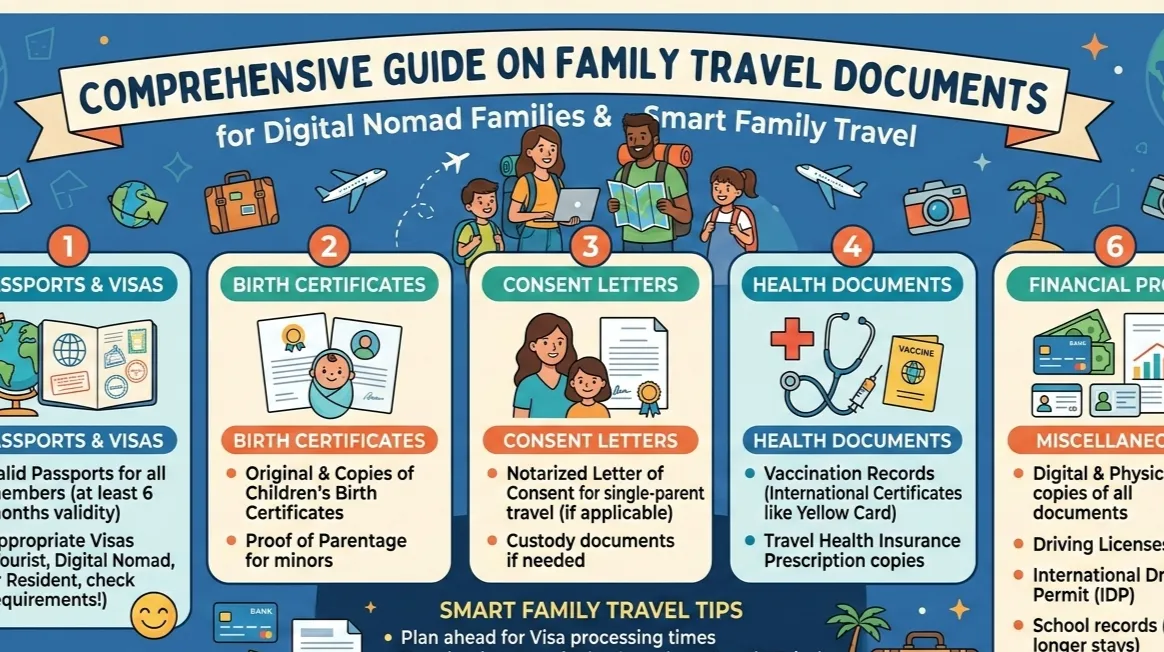
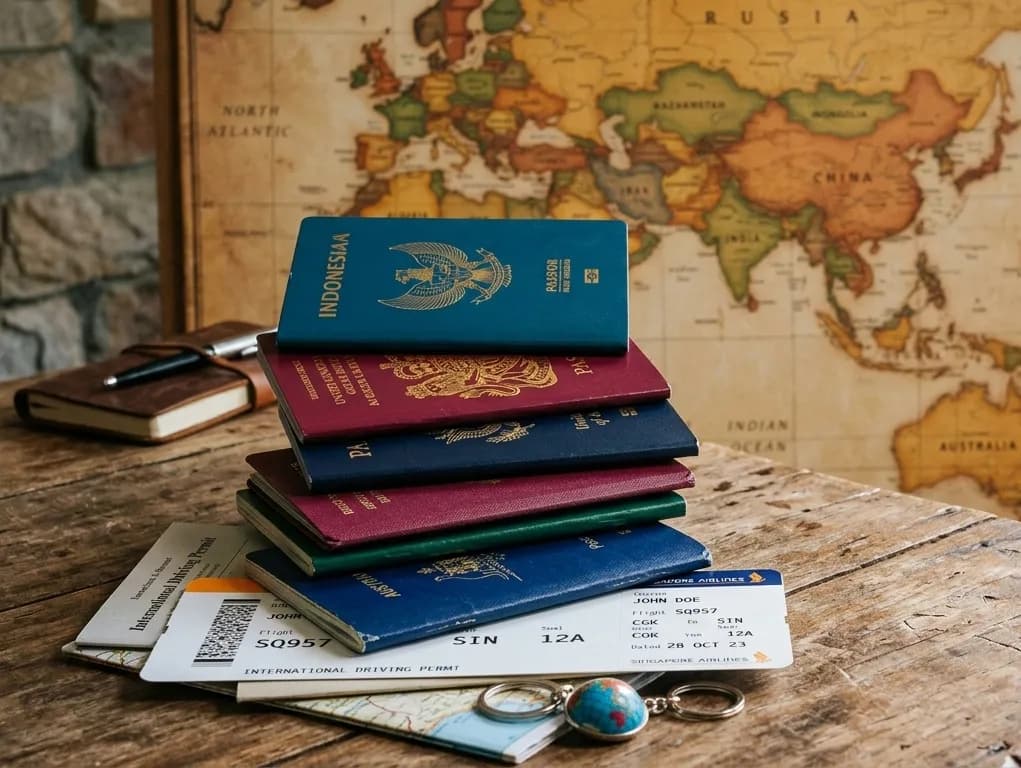
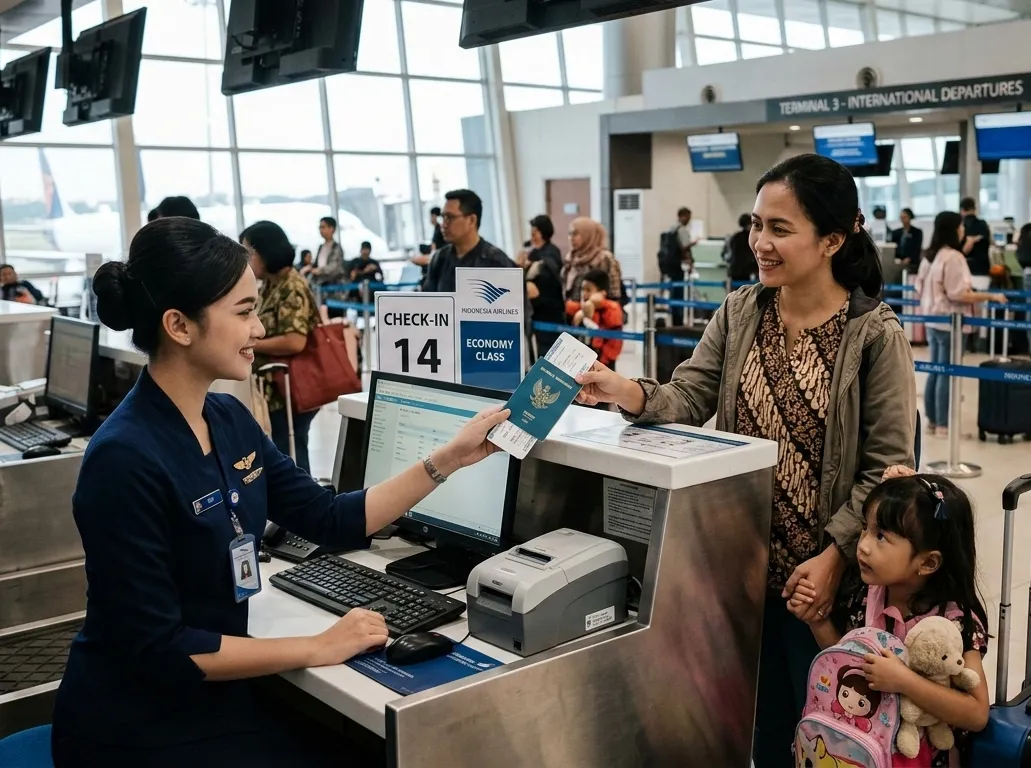
It sounds elementary, but the passport is the most critical of the family travel documents you need. However, for families, the complexity increases. Did you know that many countries require passports to be valid for at least six months beyond your date of departure? If your child’s passport expires in five months, you might be denied boarding at the gate.
Furthermore, children's passports often expire every five years rather than ten. It is incredibly easy for a busy parent to overlook an expiration date. When you travel international, every family member—including infants—must have their own individual passport.
Visas are the next hurdle. Depending on your citizenship and destination, you might need a traditional stamped visa, an e-Visa, or a simple visa-on-arrival. Always check the official embassy website of your destination at least two months in advance. Some family visas require proof of funds or onward travel, so keep those digital receipts handy.
Proof of Relationship: Why Birth Certificates Matter
You might wonder why you need a birth certificate if your child has a passport. The reality is that passports don't always list the parents' names. If you have a different surname than your child, or if you are traveling through a country with strict anti-trafficking laws (like South Africa), a certified copy of a birth certificate is one of the essential family travel documents you need.
We recommend carrying a "long-form" birth certificate that clearly states the names of both parents. If the original is in a language other than English or the language of your destination, consider having a notarized translation. It might feel like overkill until the moment an immigration officer questions your relationship to your children.
The Notarized Parental Consent Letter
This is perhaps the most overlooked document in family travel. If you are traveling as a solo parent, or if one parent is staying behind while the other travels with the kids, you almost certainly need a notarized parental consent letter.
This document proves that the non-traveling parent has given permission for the children to travel international. Without it, you could be delayed or even accused of parental abduction. The letter should include:
- Dates of travel
- Destination
- Contact information for the non-traveling parent
- A copy of the non-traveling parent’s ID
Prioritizing Travel Health Documentation
Your family's physical well-being is paramount. Beyond packing a first-aid kit, you must manage your travel health paperwork. This includes international certificates of vaccination (the "Yellow Card") for diseases like Yellow Fever, if applicable to your route.
Since 2020, health declarations have become more common. Even as COVID-19 restrictions ease, some countries still require proof of specific vaccinations or health insurance that covers medical evacuation. We highly recommend keeping a digital folder with:
- Immunization records for all children
- Prescriptions for any maintenance medications
- A summary of any chronic conditions or allergies
To further help you on your journey, we highly recommend reading our guide on the Best Travel Insurance for Families and learning How to Handle Medical Emergencies Abroad.
Insurance and Financial Security
When we talk about the family travel documents you need, insurance policies are non-negotiable. A physical or digital copy of your family travel insurance policy should be accessible at all times. This document should clearly state your policy number and the 24/7 emergency contact number of the insurer.
Additionally, carry proof of financial means. Some countries require you to prove you can support your family during your stay. A recent bank statement or a printout of your credit card limit can serve as a safety net if an immigration officer decides to be particularly thorough.
The Digital Backup Strategy: Redundancy is Key
In the age of smartphones, carrying a mountain of paper feels archaic. However, technology can fail. A dead battery or a stolen phone shouldn't mean losing access to your family travel documents you need.
We follow the "Rule of Three":
- Physical Originals: Kept in a waterproof, RFID-blocking organizer.
- Physical Copies: A set of photocopies stored in a separate bag from the originals.
- Digital Encrypted Cloud: Scanned PDFs stored on a secure cloud service (like Google Drive or Dropbox) and also saved for offline access on your devices.
This redundancy ensures that even if you lose your primary bag, you can still prove your identity and authorization to travel.

Value Section: Pro-Tips for Document Organization
After years on the road, we’ve developed a system that minimizes stress. Here are our best practices for managing family travel documents you need:
- The Color-Coded System: Use different colored passport covers for each family member. It saves precious minutes at the boarding gate when you aren't flipping through five identical blue booklets.
- The "Go-Bag" Folder: Keep all boarding passes, hotel confirmations, and transit visas in a single, slim plastic folder that fits in your seatback pocket.
- Emergency Contact Cards: We put a small laminated card in each child’s pocket or backpack. It lists their name, our contact info, and any critical travel health info (like a peanut allergy).
- Check the "Packing List": Documentation is just one part of the puzzle. For a complete look at what else to bring, see our Packing List for 1 Month Family Travel.
Final Thoughts on Preparation
Preparation is the ultimate superpower for traveling parents. While it might seem tedious to gather all the family travel documents you need, the peace of mind it provides is priceless. By staying organized and anticipating the requirements of travel international regulations, you free yourself to focus on what really matters: making memories with your children.
Remember, rules change. Always verify the latest requirements for your specific destination at least a month before departure. Stay flexible, stay organized, and keep your documents ready.
FAQ
1. Do infants really need a passport for international travel? Yes, every person, regardless of age, must have their own passport when you travel international. Some domestic flights might allow a birth certificate, but for crossing borders, a passport is mandatory.
2. What should I do if I lose my family's passports abroad? Immediately contact the nearest embassy or consulate of your home country. Having digital copies of the family travel documents you need (stored in the cloud) will significantly speed up the replacement process.
3. Is a digital copy of a vaccination record enough for travel health requirements? It depends on the country. Many countries now accept digital QR codes or apps, but some still require the original physical "Yellow Card" for specific diseases. Always carry the physical copy to be safe.
4. How recent does a parental consent letter need to be? Ideally, the letter should be dated within a few weeks of your departure and specify the exact dates of the trip. Some countries are very strict about the "freshness" of notarized documents.
5. Can I use a scan of my birth certificate instead of the original? Usually, immigration requires a "certified copy" or the original. A simple photocopy or scan might be rejected if the officer is following strict protocols regarding the family travel documents you need.
AdSense Placeholder (728x90 or 300x250)
Join Our Nomad Family
Get weekly tips on smart family travel, remote work strategies, and homeschooling resources delivered straight to your inbox.
We respect your privacy. Unsubscribe at any time.
Related Articles