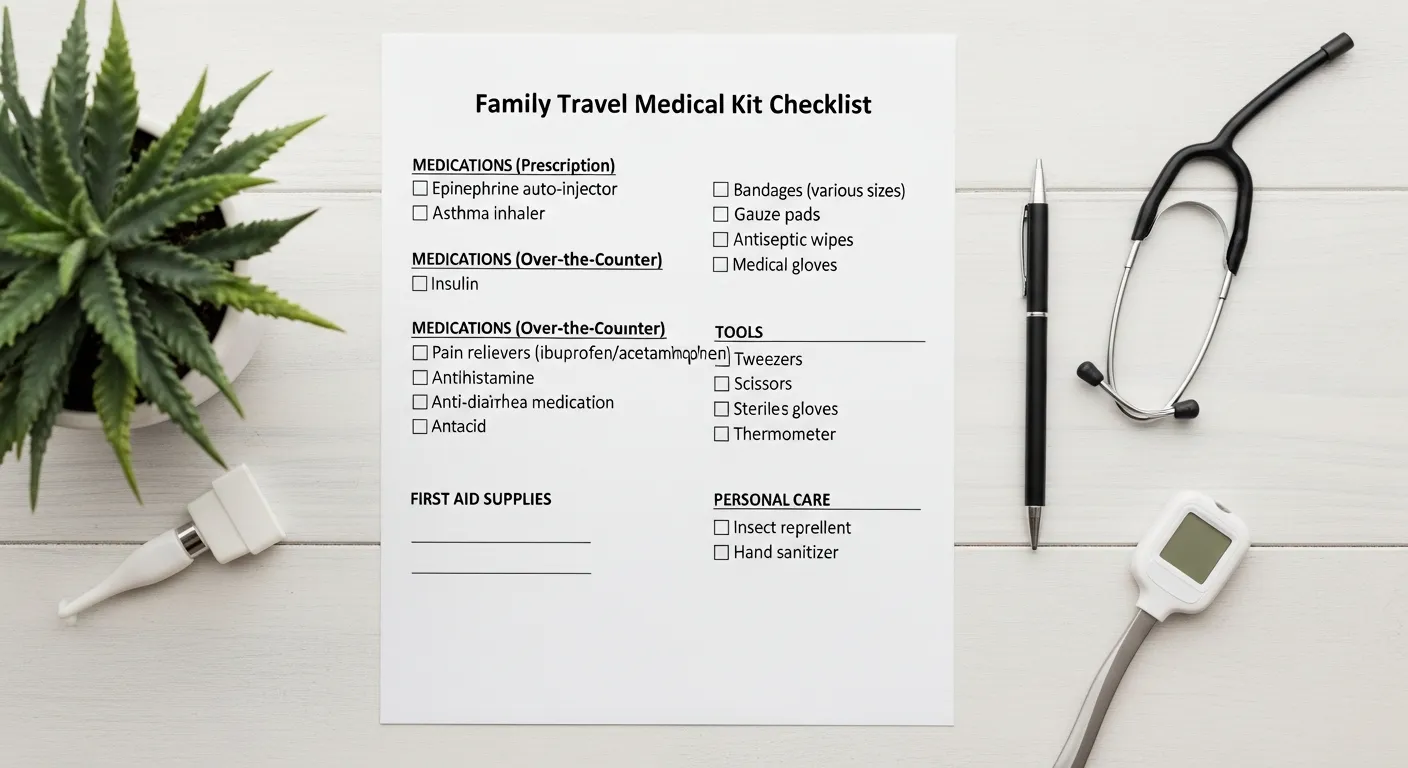
Family Travel Medical Kit Checklist
Imagine this: It’s 2:00 AM in a remote village in the Andes, or perhaps a bustling district in Tokyo, and your toddler suddenly wakes up with a burning fever. The nearest pharmacy is closed, and even if it were open, the language barrier feels like an insurmountable wall. This is the nightmare scenario that keeps parents awake at night. However, with a properly prepared family travel medical kit checklist, this situation shifts from a crisis to a manageable hiccup.
As a digital nomad family that has navigated everything from tropical bugs in Bali to altitude sickness in Peru, we’ve learned that a first aid kit isn't just about bandages—it’s about peace of mind. Whether you are planning a weekend getaway or a year-long expedition, having the right supplies on hand allows you to focus on making memories rather than hunting for ibuprofen in a foreign language.
This article is part of our comprehensive family travel series. Be sure to check out our Ultimate Guide to Family Travel in 2026 for a complete overview.
Why Every Parent Needs a Dedicated Travel Medicine Kit List
Most travelers make the mistake of thinking they can "just buy it there." While globalization has made many brands universal, the specific dosages for children or the exact formulation you trust might not be available. A curated travel medicine kit list ensures that you have pediatric-strength medications that your children are already familiar with.
Furthermore, when a child is in pain or discomfort, every minute counts. Searching for a "Farmacia" at midnight is not how you want to spend your vacation. A well-organized kit acts as your mobile frontline defense, providing immediate relief for common ailments like motion sickness, allergic reactions, and minor injuries.
The Core Essentials: Best First Aid Kit for International Travel
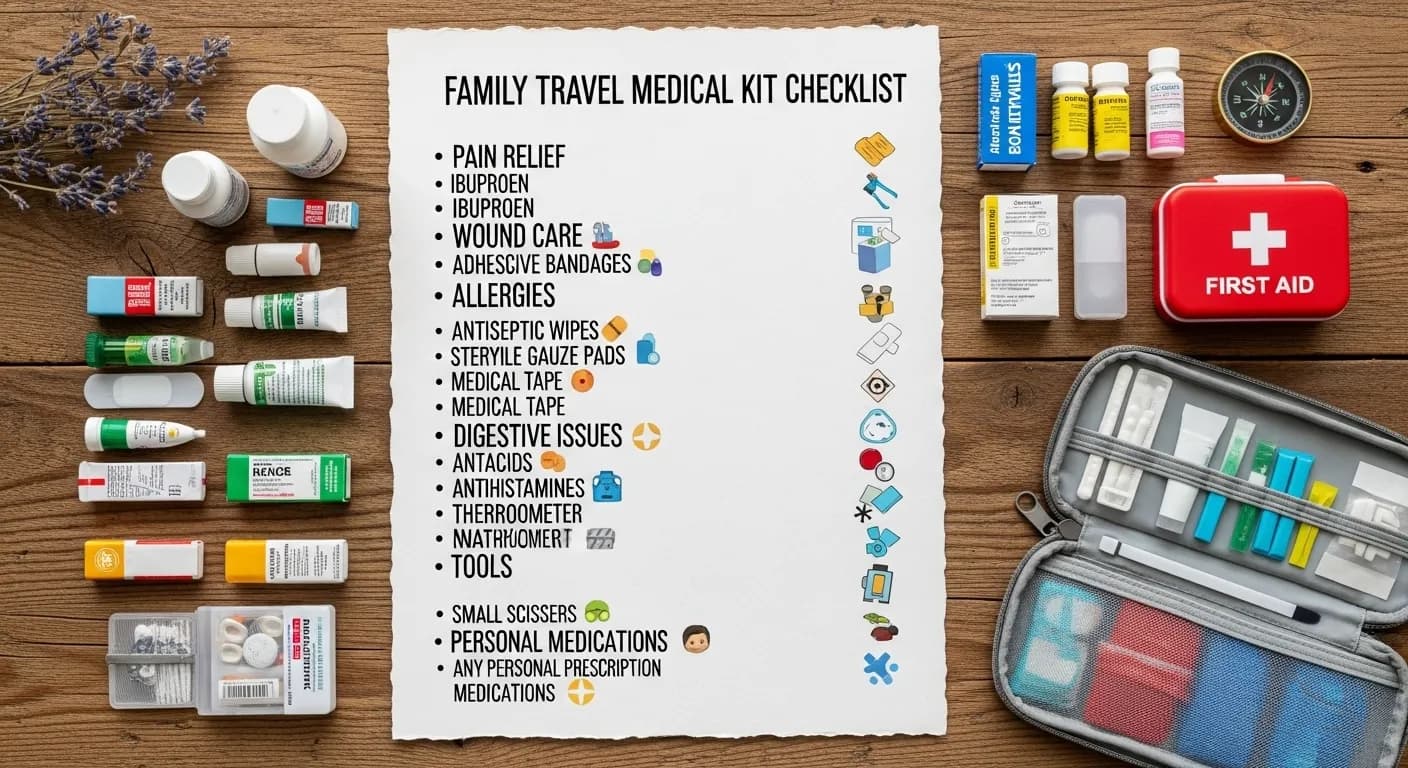
When building the best first aid kit for international travel, you need to strike a balance between being prepared and staying lightweight. You don't need a hospital in your suitcase, but you do need the "Big Three": Wound care, Pain Management, and Gastrointestinal support.
1. Wound Care and Antiseptics
Kids are magnets for scraped knees and splinters. Your kit should include:
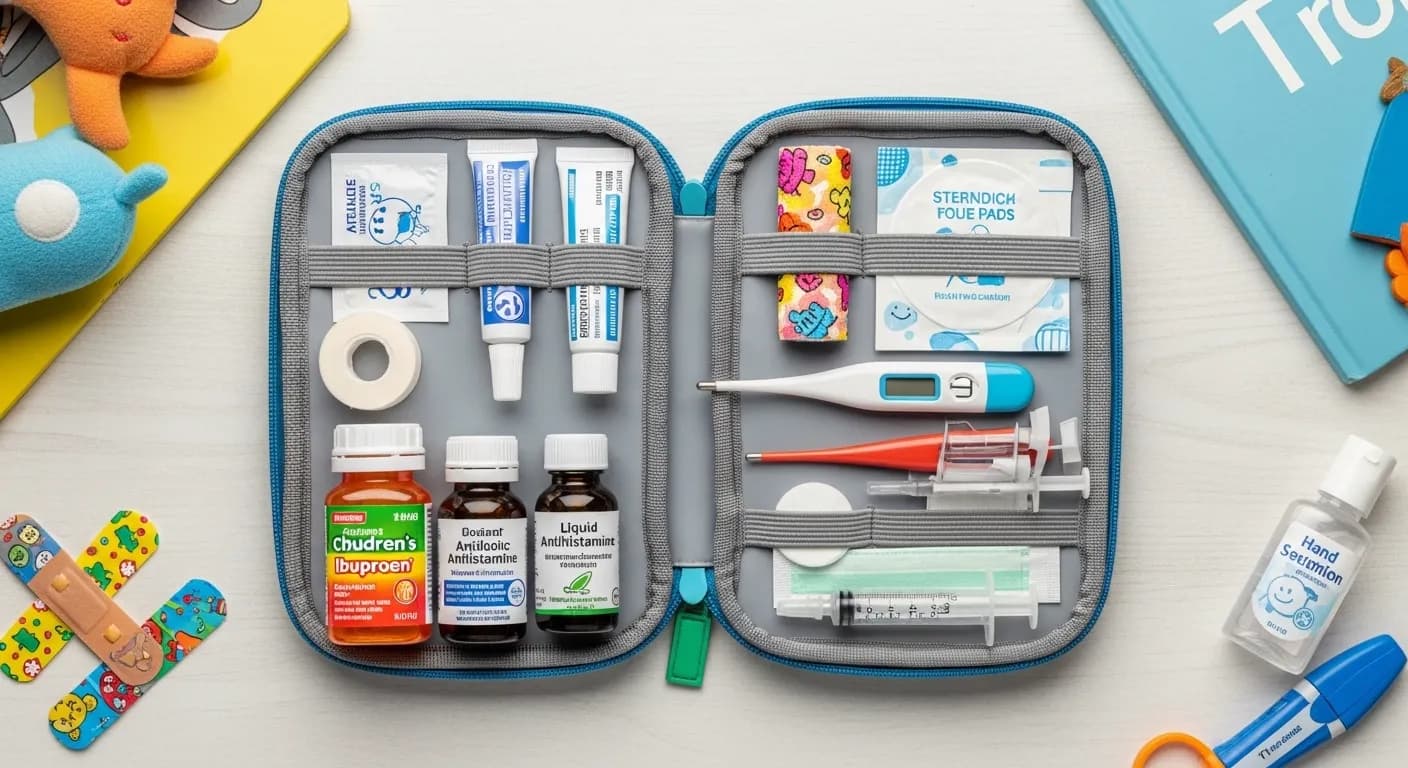
- Adhesive Bandages: Various sizes, including waterproof options.
- Sterile Gauze Pads and Medical Tape: For larger scrapes.
- Antiseptic Wipes or Spray: To clean wounds without the sting.
- Antibiotic Ointment: To prevent infection in humid climates.
- Hydrocortisone Cream: Essential for itchy bug bites or mysterious rashes.
2. Pain and Fever Relief
This is arguably the most important part of your best travel medicine list.
- Infant/Child Ibuprofen or Acetaminophen: Always carry the liquid or chewable version your child prefers.
- Digital Thermometer: Don't guess a fever; measure it.
- Cooling Gel Patches: These are lifesavers for bringing down temperatures during long flights.
Gastrointestinal Health: Navigating "Traveler’s Tummy"
Nothing ends a trip faster than a stomach bug. For families, dehydration is the biggest risk when dealing with diarrhea or vomiting. Your family travel medical kit checklist must prioritize gut health.
- Oral Rehydration Salts (ORS): These are vital. Look for flavored versions that kids will actually drink.
- Probiotics: Starting these a week before your trip can help strengthen the gut microbiome.
- Anti-diarrheal Medication: Consult your pediatrician for age-appropriate options.
- Motion Sickness Relief: Whether it’s ginger chews or wristbands, have these ready for winding mountain roads or choppy boat rides.
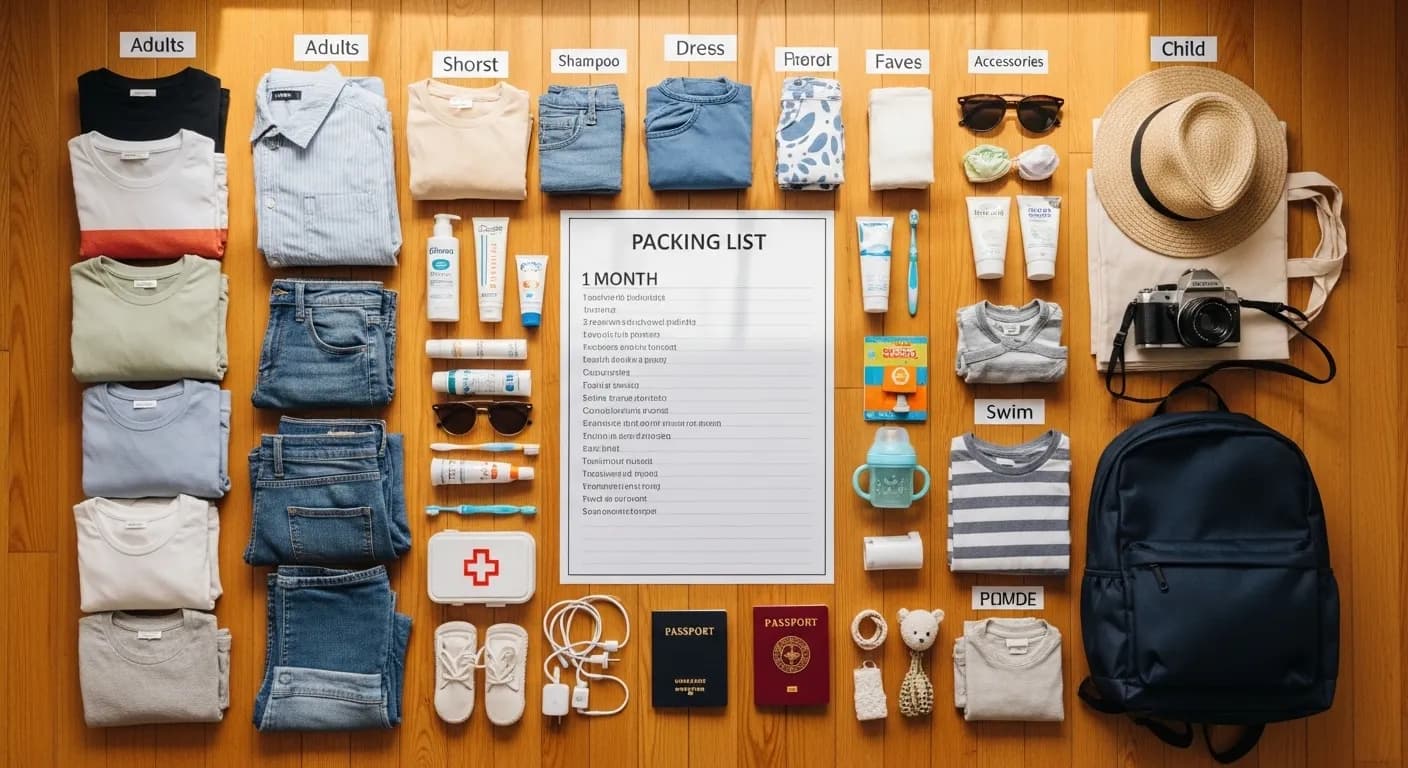
To further help you on your journey, we highly recommend reading our Packing List for 1 Month Family Travel to see how we fit all these medical supplies into a compact carry-on.
Respiratory and Allergy Management
Changes in air quality, new blooming plants, or dusty hotel rooms can trigger respiratory issues in children. Even if your child doesn't have known allergies, travel introduces them to a world of new triggers.
Include an antihistamine (like Cetirizine or Loratadine) in your kit. For families traveling to areas with high pollution or during flu season, a small saline nasal spray can help keep nasal passages clear and reduce the risk of sinus infections. If anyone in the family has asthma, ensure you have a "spacer" for inhalers, as these are much more effective for children than the inhaler alone.
The Professional "Digital Nomad" Edge: Prescriptions and Documentation
Traveling long-term requires a different level of preparation. If you're learning How to Travel Full-Time Without Being Rich, you know that medical costs abroad can be a significant "hidden" expense.
Always carry a copy of your prescriptions. In many countries, you may need to show a doctor's note to carry certain medications through customs. We recommend taking a photo of all prescription labels and storing them in a secure cloud folder (like Google Drive or Dropbox).
Additionally, keep a small card inside your kit that lists:
- Each family member's blood type.
- Known allergies (especially to medications like Penicillin).
- Emergency contact numbers for your pediatrician back home.
Organizing Your Kit: The "Grab-and-Go" Method
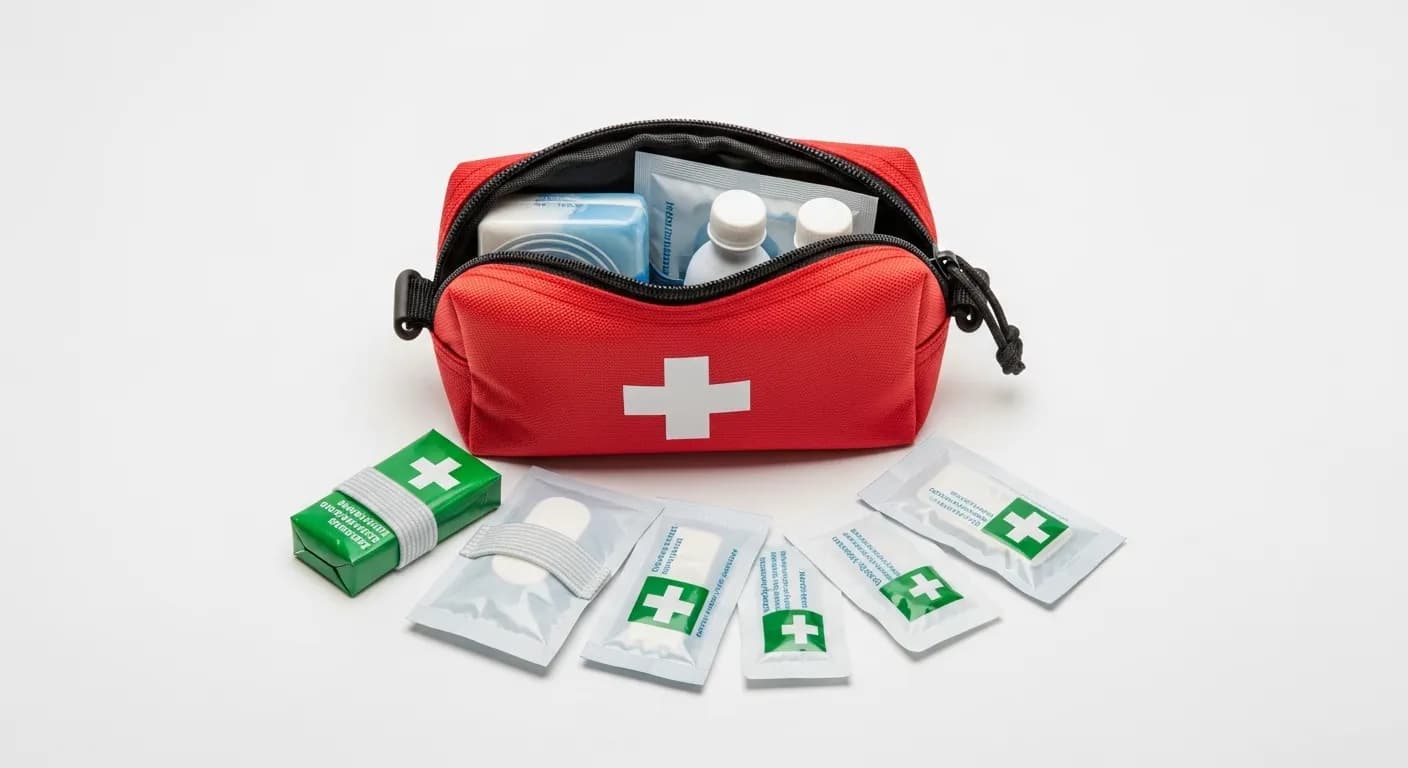
A family travel medical kit checklist is only useful if you can find what you need in a hurry. We suggest using a clear, waterproof hanging toiletry bag.
- Clear Pockets: Allows you to see exactly where the thermometer is without dumping everything out.
- Categorization: Group items by use (e.g., "Sleep & Calm," "Tummy Troubles," "Ouchies").
- Accessibility: Keep a "Mini Kit" in your daypack with just the essentials (bandages, antiseptic, and one dose of pain relief) and leave the "Master Kit" at the hotel or Airbnb.
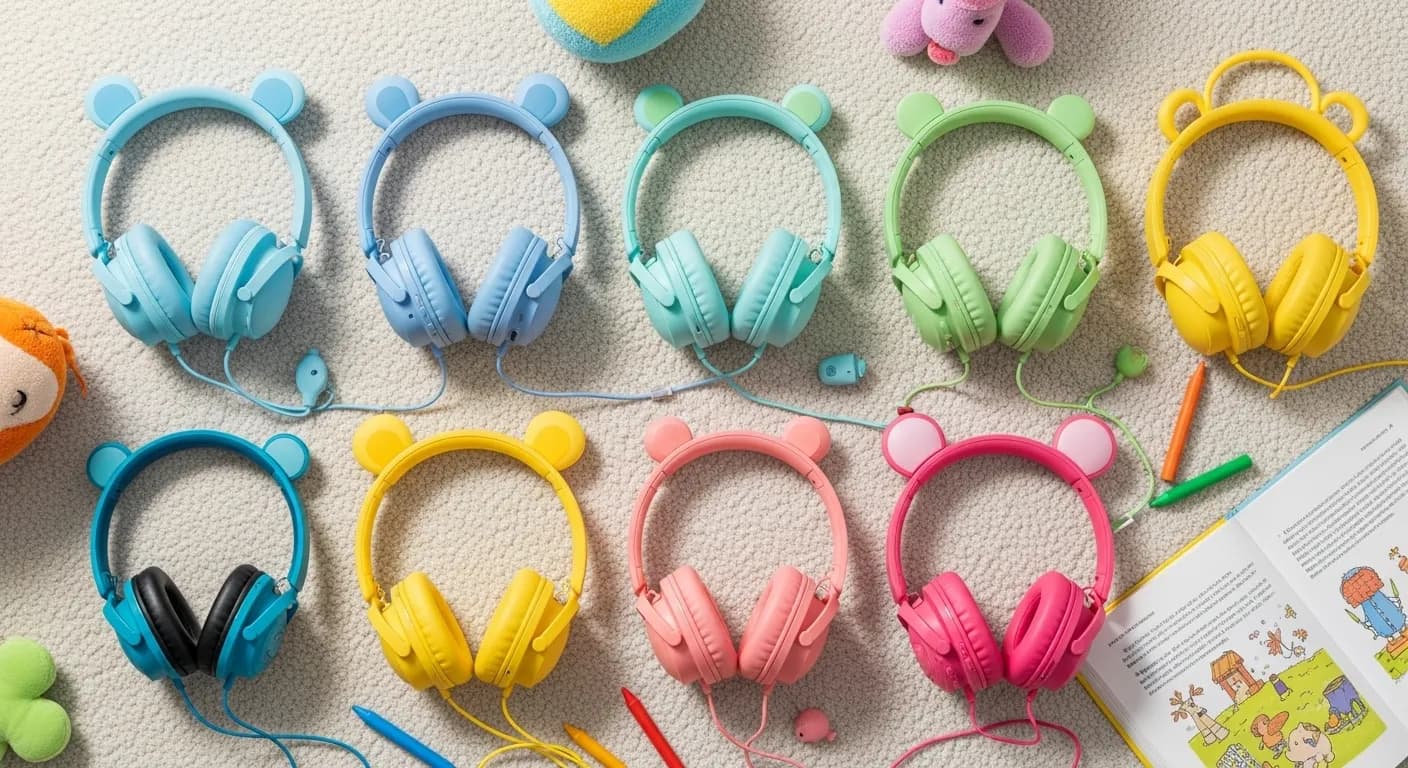
Don't forget comfort items! Sometimes a Best Noise-Canceling Headphones for Kids session with a favorite movie is the best "medicine" for a child feeling overwhelmed by travel-induced fatigue.
Expert Value: Pro-Tips for International Medical Safety
Beyond the physical items, here are the best practices we’ve gathered from years on the road:
- Check Expiration Dates: Do this one month before every major trip. Liquid medications often have a shorter shelf life once opened.
- Know the Local "911": Emergency numbers vary by country (e.g., 112 in Europe, 999 in the UK). Program these into your phone the moment you land.
- The "Ziploc" Hack: Transfer bulky medicine boxes into small Ziploc bags. Cut out the dosage instructions from the original box and tape them to the bag to save space.
- Local Pharmacy Apps: In many countries, apps like Glovo or Grab can deliver over-the-counter pharmacy items directly to your door.
- Water Safety: If you are traveling to a region where tap water isn't potable, include water purification tablets or a SteriPen in your kit as a backup.
Summary Checklist for Quick Reference
To wrap up, here is your condensed family travel medical kit checklist:
- Pain/Fever: Ibuprofen, Acetaminophen, Thermometer.
- Wounds: Bandages, Gauze, Antiseptic spray, Tweezers (for splinters).
- Skin: Hydrocortisone, Sunscreen, Insect repellent (DEET or Picaridin).
- Stomach: ORS packets, Probiotics, Anti-nausea meds.
- Allergy: Antihistamines, Epi-Pen (if prescribed), Eye drops.
- Meds: Prescription refills, a copy of the doctor's note.
FAQ
What is the most important item in a family travel medical kit?
While every item has its place, a digital thermometer and age-appropriate pain/fever relief are the most critical. Fevers are the most common reason parents seek medical help while traveling, and having the means to monitor and treat them immediately is vital.
Can I take liquid medications on a plane?
Yes. Most aviation authorities (like the TSA) allow "medically necessary liquids" in quantities larger than 3.4 ounces. However, you must declare them at security, and it is helpful to have them in their original packaging.
Should I buy a pre-made first aid kit or build my own?
Pre-made kits are a great base for the best first aid kit for international travel, but they often lack pediatric dosages and specific medications. We recommend buying a high-quality base kit and then "boosting" it with your family's specific needs.
How do I handle medications that need refrigeration?
If you travel with insulin or other temperature-sensitive meds, invest in a small medical travel cooler bag with gel ice packs. Most airlines will allow these as an extra "medical bag" that doesn't count toward your carry-on limit.
Is travel insurance necessary if I have a medical kit?
Absolutely. A medical kit is for minor issues and stabilization. Travel insurance is for emergencies, hospital stays, or medical evacuations. Never travel internationally without a policy that covers the whole family.
AdSense Placeholder (728x90 or 300x250)
Join Our Nomad Family
Get weekly tips on smart family travel, remote work strategies, and homeschooling resources delivered straight to your inbox.
We respect your privacy. Unsubscribe at any time.
Related Articles