How to Budget for Long-Term Travel
The dream of selling your belongings, packing a few bags, and taking your kids to see the world is intoxicating. However, for most families, the biggest barrier isn't the courage to leave—it's the math. Understanding how to budget for long-term travel is the difference between a stressful three-month stint and a sustainable multi-year lifestyle.
As a digital nomad family, we have learned that long-term travel budgeting is fundamentally different from planning a two-week vacation. On a vacation, you splurge because the end is in sight. In long-term travel, your budget is your lifeline. If you overspend in month one, you’re cutting your journey short in month six. This guide will walk you through the nuances of financial planning for the road, ensuring your bank account stays as healthy as your sense of adventure.
This article is part of our comprehensive family travel series. Be sure to check out our Ultimate Guide to Family Travel in 2026 for a complete overview.
The Mindset Shift: Vacation vs. Lifestyle
The first step in learning how to budget for long-term travel is shifting your mindset. You are no longer a "tourist"; you are a resident of the world. Tourists stay in hotels; nomads stay in apartments with kitchens. Tourists eat out every meal; nomads shop at local markets.
When you treat travel as a lifestyle, your "burn rate"—the amount of money you spend per month—becomes the most important metric. Unlike a fixed holiday cost, a long-term budget is fluid. Some months in Switzerland will be expensive, while months in Vietnam will allow you to replenish your savings. Balancing these highs and lows is the secret to staying on the road indefinitely.

How to Make a Travel Budget from Scratch
If you are wondering how to make a travel budget that actually works, you need to start with the "Big Three" expenses: Accommodation, Transportation, and Food.
- Accommodation (30–40% of budget): Look for monthly discounts on platforms like Airbnb or local Facebook groups. Staying in one place for 30 days can often drop the price by 50% compared to nightly rates.
- Transportation (15–20% of budget): This includes international flights, but more importantly, local transport. Slow travel—taking trains or buses instead of frequent flights—is the most effective way to keep costs down.
- Food and Living (20–30% of budget): This is where most families fail. To keep your budget intact, aim to cook at least 60% of your meals at home. Exploring local grocery stores is also a fantastic cultural experience for kids.
To get an accurate picture, use a travel budget calculator or a simple spreadsheet to track every penny for the first three months. You’ll likely find "hidden leaks" like subscription services you no longer use or excessive ATM fees.
Essential Tools: The Travel Budget Planner
You wouldn't build a house without a blueprint, and you shouldn't start a global journey without a travel budget planner. Whether you prefer a high-tech app like You Need A Budget (YNAB) or a customized Excel sheet, your planner should categorize expenses into "Fixed" and "Variable."
Fixed Expenses:
- Travel insurance (Non-negotiable)
- Storage unit fees back home
- Schooling or curriculum costs for kids
- Software subscriptions for remote work
Variable Expenses:
- Dining out and entertainment
- Local tours and museum entries
- Visa fees (these vary wildly by country)
- Emergency "oops" fund
A good travel budget planner allows you to see your "daily average." If your goal is $150 a day for a family of four, and you spend $300 today on a Disney excursion, your planner will show you that you need to spend only $100 for the next three days to break even.
Leveraging Financial Rewards and Credit
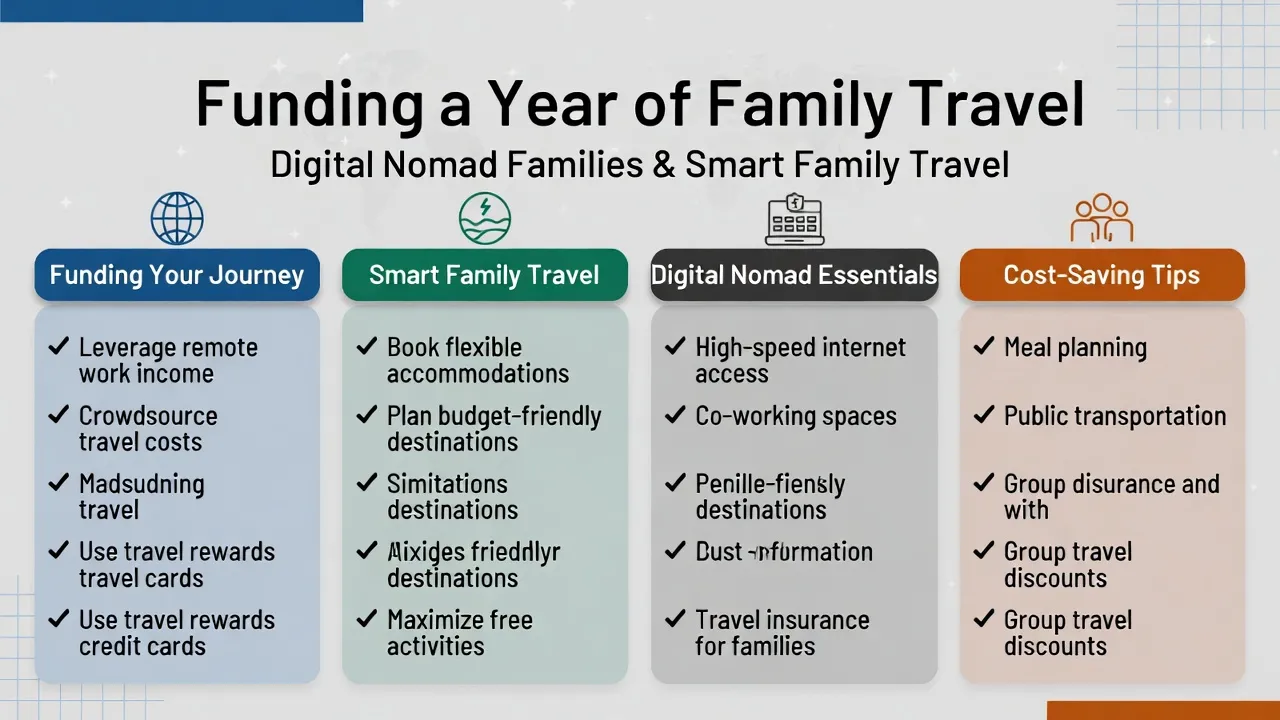
Smart budgeting isn't just about spending less; it's about making your money work harder. One of the most effective ways to offset the cost of long-term travel is through strategic "travel hacking." By using the right financial tools, you can earn free flights and hotel stays while spending on your everyday necessities.
For a deeper dive into which cards offer the best protection and rewards for parents, read our guide on the Best Family Travel Credit Cards. Using these cards for your "Big Three" expenses can result in thousands of dollars in annual savings.

Managing Cash Flow and Passive Income
The most successful long-term travelers aren't just living off savings; they have multiple streams of income. When you are figuring out how to budget for long-term travel, you must also consider your "income floor." This is the minimum amount you need to earn each month to stop your savings from depleting.
Many parents transition to remote work or start side hustles that can be managed from a laptop. If you can cover even 50% of your daily costs through remote work, your "runway" doubles in length.
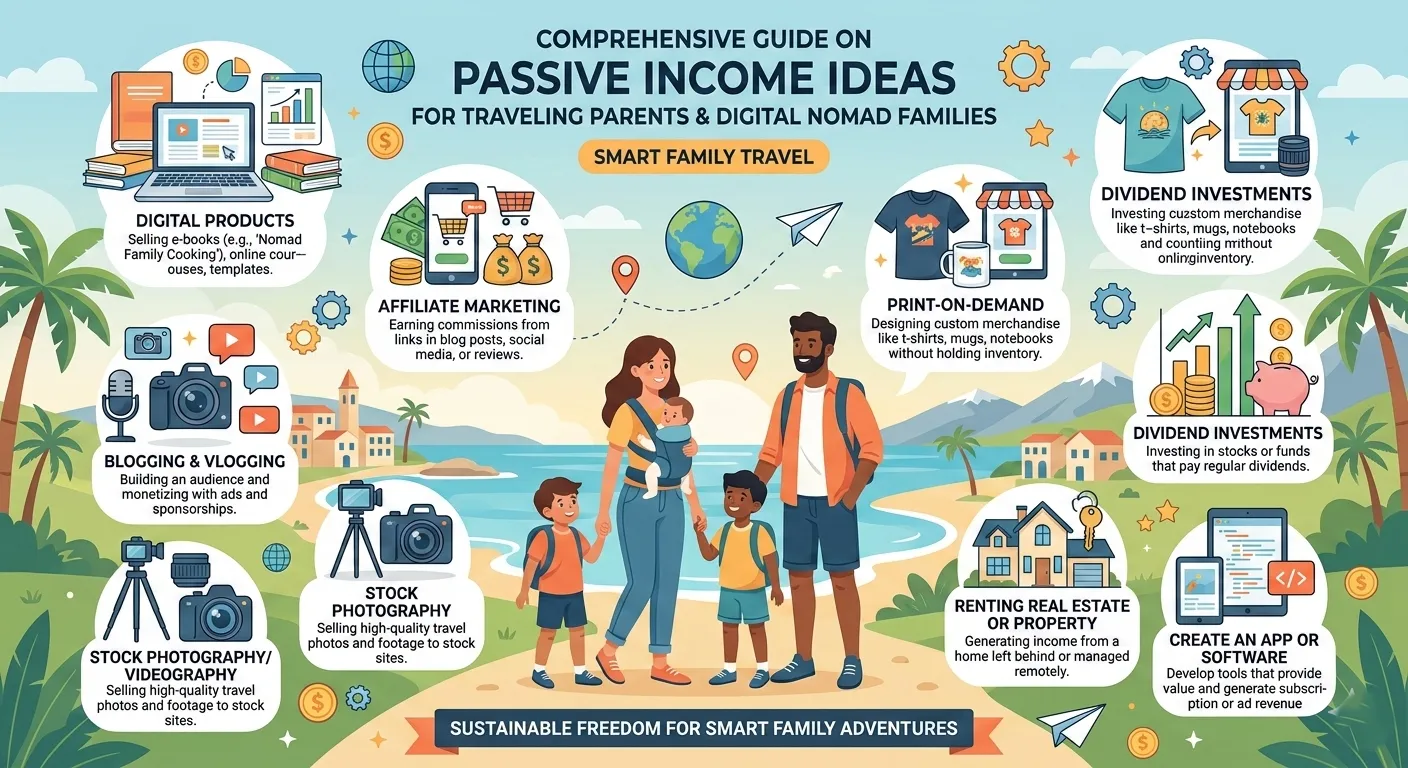
To explore how you can fund your lifestyle without a traditional 9-5, check out our list of Passive Income Ideas for Traveling Parents.
Why Preparation and Flexibility are Key
When traveling with children, the "lowest cost" option isn't always the best option. A 12-hour bus ride might save you $200, but the resulting exhaustion and "meltdown risk" might cost you two days of productivity.
- Preparation is Key: Research the cost of living in your next destination using sites like Numbeo. Knowing that a gallon of milk costs $8 in one city versus $2 in another helps you adjust your expectations before you arrive.
- Stay Flexible: Your travel budget planner is a guide, not a prison. If you find a destination you love that is slightly over budget, stay longer but find ways to cut back on "extra" activities.
- Prioritize Comfort: For long-term sustainability, you need a "home base" where everyone feels safe. Sometimes, paying an extra $200 a month for a place with a dedicated workspace and a playground nearby is the best investment you can make.
Gear and Packing: A Budget Perspective
Believe it or not, your packing list affects your budget. Overpacking leads to heavy luggage fees and the need for larger (more expensive) rental cars. Investing in high-quality, versatile gear upfront saves you from having to buy replacements in expensive tourist zones.
For instance, choosing the Best Carry-On Luggage for Families can save a family of four upwards of $120 per flight in checked bag fees. Over a year of travel, that’s enough to fund a full month of living in Bali!

Value Section: Expert Budgeting Tips for Families
After years on the road, we’ve developed a few "pro-tips" that don't usually appear in standard travel guides:
- The "Slow-Mo" Rule: Spend at least 4 weeks in one location. Not only does this reduce transport costs, but it also allows you to find the "local price" for groceries and services rather than the "tourist price."
- Geo-Arbitrage: Spend 70% of your year in "Value Destinations" (Southeast Asia, Eastern Europe, parts of Latin America) and 30% in "Bucket List" destinations (Scandinavia, Japan, USA).
- The ATM Strategy: Use banks like Charles Schwab or Revolut that refund international ATM fees. Those $5 fees add up to hundreds of dollars a year.
- Local Schooling/Camps: Instead of expensive international tutors, look for local "forest schools" or day camps. They are often much cheaper and provide a better cultural immersion for your kids.
FAQ
1. How much money do I need to travel long-term with a family? While it varies by destination, a comfortable average for a family of four is between $3,500 and $5,000 per month. In low-cost regions like Thailand, you can live well on $2,500, while London or New York may require $8,000+.
2. Is a travel budget calculator accurate for families? Most calculators are built for solo backpackers. When using a travel budget calculator, always add a 20% "family buffer" to account for kid-specific needs, convenience fees, and larger accommodation requirements.
3. What is the biggest hidden cost of long-term travel? Visas and health insurance. Many families forget to budget for the $200–$500 per month it costs for high-quality global health insurance, or the several hundred dollars required for visa renewals and "border runs."
4. How do I handle taxes while traveling long-term? This depends on your citizenship. Most "digital nomads" remain tax residents of their home country unless they stay in one place long enough to trigger local tax laws. Always consult a professional regarding the Foreign Earned Income Exclusion (FEIE).
5. Should I sell my house or rent it out to fund my travel? Renting out your home can provide a steady stream of passive income, which is a cornerstone of a solid travel budget planner. However, selling provides a large "safety net" of cash. Most long-term travelers recommend renting it out first to see if the lifestyle suits them.
Conclusion
Learning how to budget for long-term travel is a skill that improves with time. Don't be discouraged if your first month is over budget—there is a learning curve to finding the balance between "living" and "traveling." By using a robust travel budget planner, staying flexible, and prioritizing the experiences that matter most to your family, you can turn the dream of world travel into a sustainable reality.
Remember, the goal isn't to see the most places for the least amount of money; it's to have the richest experiences without financial stress. Start small, track everything, and soon the world will feel like your backyard.
AdSense Placeholder (728x90 or 300x250)
Join Our Nomad Family
Get weekly tips on smart family travel, remote work strategies, and homeschooling resources delivered straight to your inbox.
We respect your privacy. Unsubscribe at any time.
Related Articles